Final Test Flight
An autonomous flight system built around NVIDIA’s Jetson Nano running YOLOv3 for real-time object detection and navigation.
Project Overview
During my time at the University of Minnesota Duluth, I built an autonomous octocopter that combined embedded AI with flight control systems. The goal was to create a drone capable of autonomous navigation using real-time computer vision.
Hardware Architecture
Core Components
Flight Platform
- Custom octocopter frame (8 motors for stability and redundancy)
- Pixhawk/iX4 autopilot flight controller
- GPS module for position tracking
- Electronic Speed Controllers (ESCs) for motor control
AI Computing
- NVIDIA Jetson Nano: The brain of the operation
- 128-core Maxwell GPU for YOLOv3 inference
- Quad-core ARM A57 CPU
- 4GB LPDDR4 memory
- Power consumption optimized for battery operation
Sensors & Connectivity
- USB camera for computer vision input
- Telemetry radio for ground station communication
- Battery monitoring system
Hardware Integration Photos
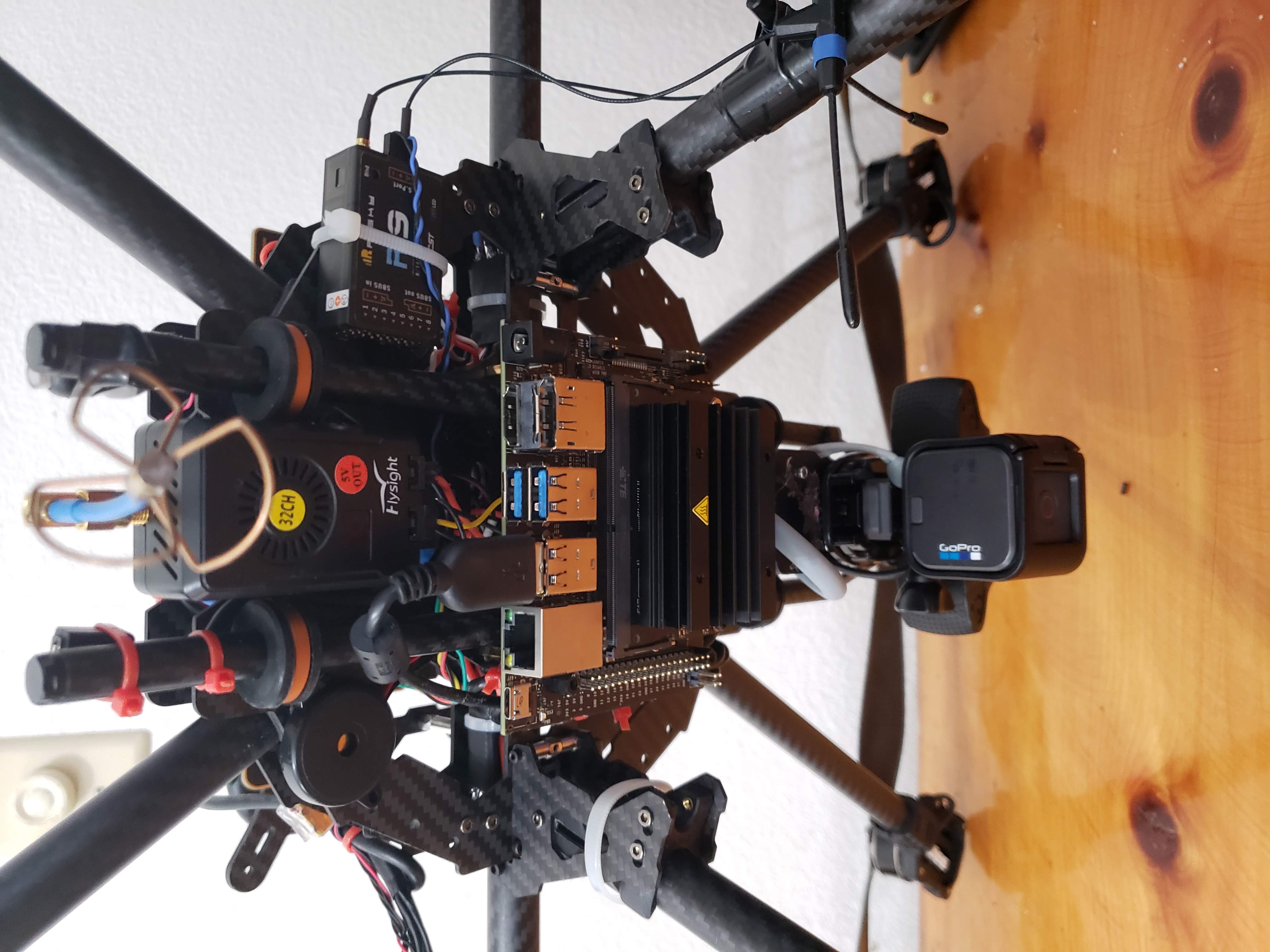 Bottom view showing the NVIDIA Jetson Nano mounted on the octocopter frame with the Pixhawk flight controller, GoPro camera, and power distribution system
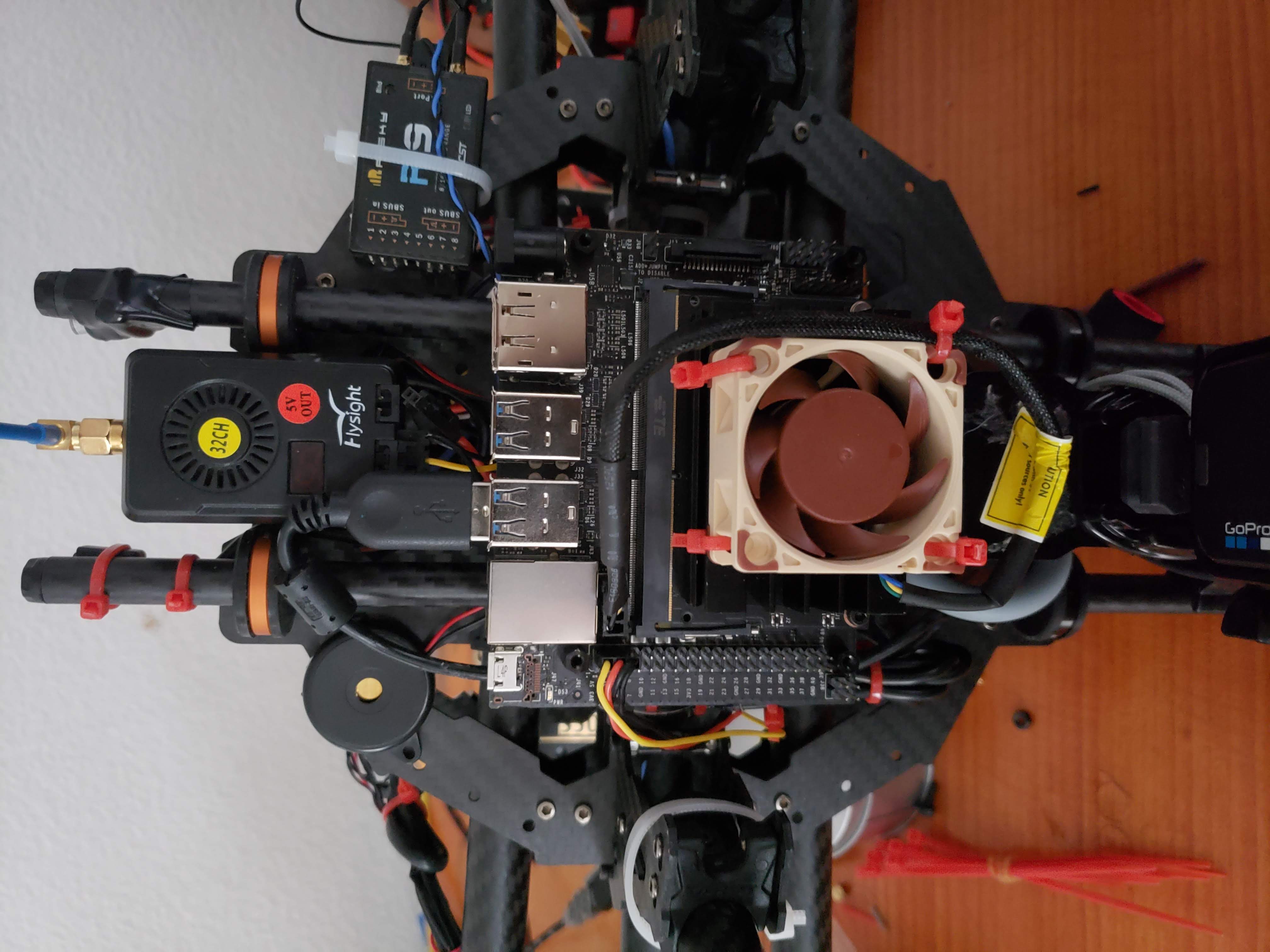 Close-up of the Jetson Nano with custom cooling fan, showing the USB ports, GPIO header, and power connections
Integration Challenges
Integrating the Jetson Nano with the flight controller required:
- Custom power distribution to provide clean 5V to the Jetson
- UART/MAVLink communication between Jetson and Pixhawk
- Weight optimization (every gram counts in flight time)
- Vibration isolation for the camera
YOLOv3 Real-Time Object Detection
Why YOLOv3?
YOLOv3 (You Only Look Once) was chosen for its balance of accuracy and speed - critical for real-time autonomous navigation:
- Single-pass detection (vs. region proposal methods)
- ~30 FPS on Jetson Nano with optimized models
- Multi-scale prediction for objects at various distances
Implementation Details
Model Optimization
- Used TensorRT to optimize YOLOv3 for Jetson’s GPU
- Reduced model precision (FP16) while maintaining accuracy
- Custom training on aerial imagery dataset
- Focused on detecting: people, vehicles, obstacles, landing markers
Real-Time Pipeline
- Capture frame from camera
- Preprocess and resize (416x416)
- Run YOLOv3 inference on GPU
- Parse detections and compute bounding boxes
- Send navigation commands to flight controller
Autonomous Navigation
The system operated in several modes:
Object Tracking Mode
- Lock onto and follow detected objects
- Maintain safe distance using depth estimation
- Automatic obstacle avoidance
Waypoint Navigation
- GPS-based waypoint following
- Object detection for dynamic obstacle avoidance
- Return-to-home on low battery or signal loss
Landing Assistance
- Visual marker detection for precision landing
- Automatic descent when safe landing zone detected
Results & Performance
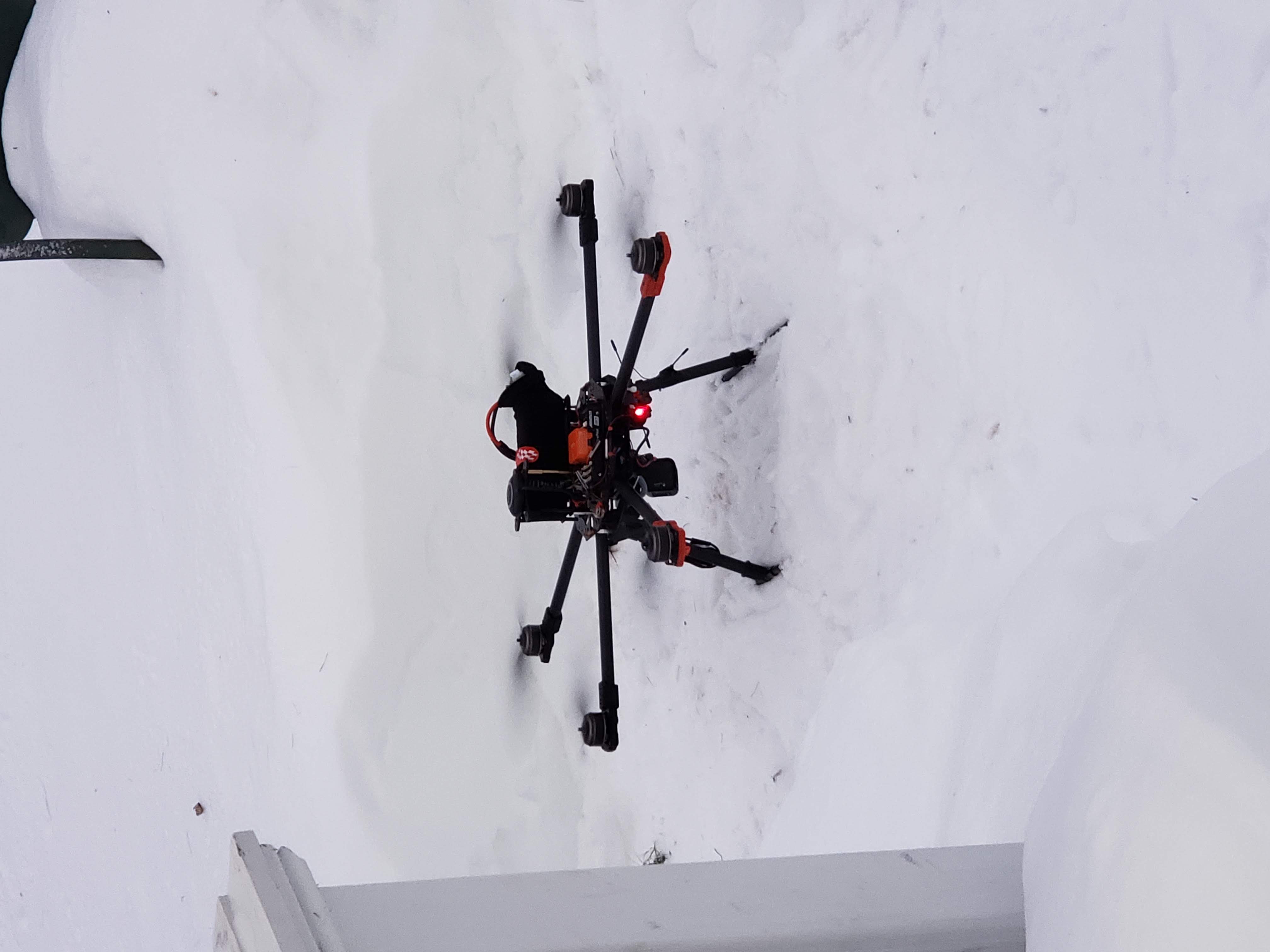 Field testing in winter conditions - the octocopter proved reliable even in cold weather and challenging lighting conditions
What Worked
Flight Stability
- Octocopter configuration provided excellent stability
- Motor redundancy allowed continued flight with single motor failure
- Smooth integration between vision system and flight controller
Detection Performance
- Consistent 25-30 FPS for object detection
- Reliable detection at ranges of 5-50 meters
- Low false positive rate after model fine-tuning
Autonomous Behavior
- Successfully demonstrated autonomous takeoff, navigation, and landing
- Real-time obstacle detection and avoidance
- Stable tracking of moving objects
Limitations
Power Constraints
- Jetson Nano added significant power draw
- Flight time reduced to ~12 minutes (vs. ~18 without AI payload)
- Battery weight trade-offs
Processing Latency
- End-to-end latency of ~100ms (camera → decision → actuation)
- Acceptable for many tasks, but challenging at high speeds
Weather Sensitivity
- Computer vision performance degraded in poor lighting
- Rain and fog significantly impacted detection reliability
Technical Lessons Learned
Embedded AI Optimization
- TensorRT optimization was crucial for real-time performance
- FP16 precision provided best speed/accuracy trade-off
- Model quantization and pruning techniques extended battery life
Hardware Integration
- Power filtering is critical - motor noise can crash the Jetson
- Vibration isolation matters more than expected for vision
- UART communication needs proper flow control for reliability
Autonomous Systems
- Multiple redundant safety systems are non-negotiable
- Failsafe behaviors need extensive testing
- Always test with GPS spoofing and signal loss scenarios
Future Improvements
If I were to rebuild this system today, I would:
Hardware Upgrades
- Jetson Xavier NX or Orin Nano (better performance per watt)
- Stereo camera for depth perception
- LiDAR for all-weather obstacle detection
Software Enhancements
- Newer YOLO versions (YOLOv8/YOLOv9) for better efficiency
- Visual-inertial odometry (VIO) for GPS-denied navigation
- Reinforcement learning for more sophisticated flight behaviors
Safety Features
- Parachute deployment system
- Geofencing with multiple boundary layers
- Computer vision-based landing zone assessment
Conclusion
This project was an excellent introduction to autonomous robotics, combining:
- Embedded systems engineering
- Real-time computer vision
- Flight control systems
- AI model optimization
The experience of getting AI running efficiently on embedded hardware while meeting the strict timing requirements of autonomous flight taught valuable lessons about system integration and real-world constraints.
While commercial solutions have since surpassed this custom build, the hands-on experience of building an autonomous system from scratch provided insights that aren’t available from using off-the-shelf solutions.
Technical Stack
- Flight Controller: Pixhawk/iX4 Autopilot
- AI Platform: NVIDIA Jetson Nano
- Computer Vision: YOLOv3 + OpenCV
- Optimization: TensorRT, CUDA
- Communication: MAVLink protocol
- Development: Python, C++
- Ground Station: QGroundControl
This project was completed in 2018 as part of my studies at the University of Minnesota Duluth.